Latest News Follow OMM on Facebook for the latest updates!
Upcoming Concert - Rite(s) of Spring
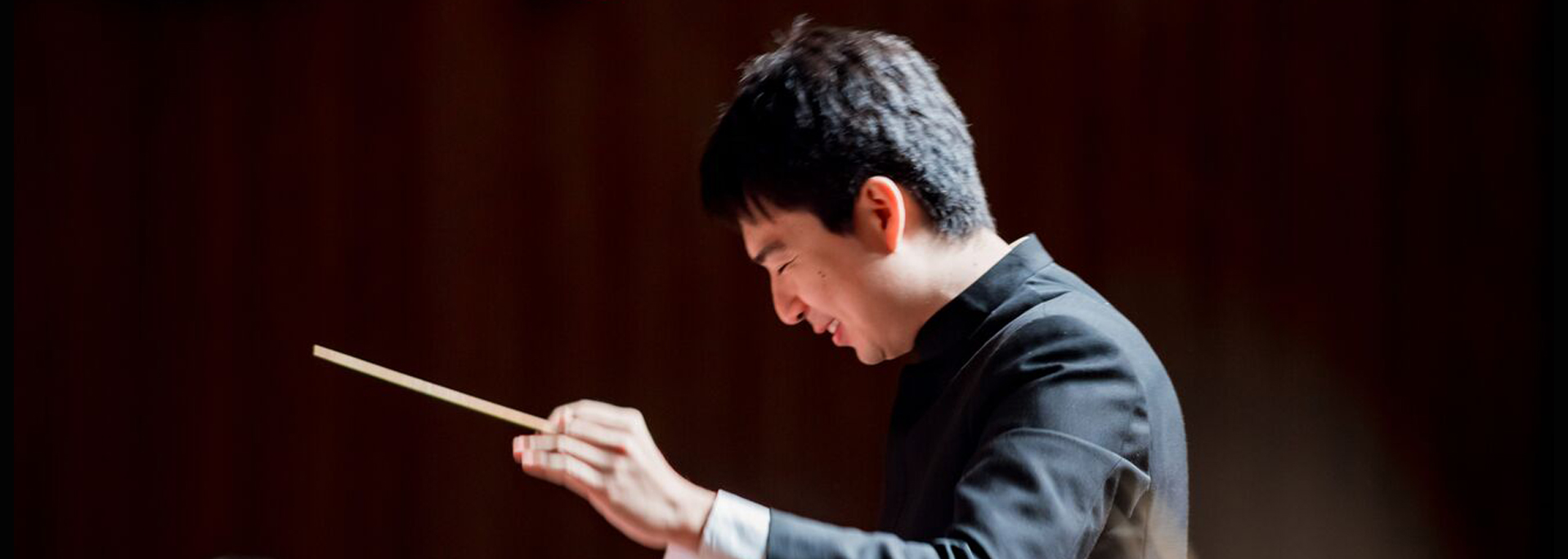
Chan Tze Law, conductor Qin Li-Wei, cello
Date: 1 and 2 June 2012, Friday and Saturday Time: 7.30pm Venue: Esplanade Concert Hall
GUSTAV HOLST Beni Mora (Oriental Suite) HO CHEE KONG Passage - Fantasy for Cello and Orchestra IGOR STRAVINSKY Le sacre du printemps (The Rite of Spring)
Come witness a project of near-impossibles that can be fulfilled only through raw passion and passion.
Take a volunteer orchestra, a spirited composer and an indie film director. Throw them together with a seminal 20th-century classical composition and you get the Rite(s) of Spring.
The Rite of Spring is a ballet revolving round a pre-Chistian Russian pagan ritual in which a young girl is sacrificed, dancing herself to death to gain the favour of the Spring God. When the ballet premiered in 1913 at the Paris Théâtre des Champs-Élysées, the audience was horrified by its intensely rhythmic score and primitive choreography.
It was, after all, an audience that was comfortable with the refined conventions of classical ballet. Igor Stravinsky’s music in the Rite of Spring is harmonically adventurous, with a prominent use of dissonance for colour and energy. Rhythmically, it is similarly exciting, with irregular, constantly changing time signatures and off-beat accents, resulting in the dancers having to count out their dance steps by the numbers like a mathematics lesson.
Today, the complex piece still gives even the most accomplished musician spasms of apprehension. But the young Orchestra of the Music Makers (OMM) takes on the challenge of reproducing this pulse with raw energy and effervescent can-do attitude. Will the young ‘uns pull it off?
Equally admirable is composer Ho Chee Kong’s original 15-minute piece preceding the Rite of Spring, which features international cellist star Qin Li-Wei in a solo. The third and final element in the Rite(s) of Spring is filmmaker Royston Tan’s endeavour to interpret classical music. Known for his indie films and more recently, commercial big-screen successes, he has never ventured anywhere near classical music — which makes his involvement in this work all the more beguiling.
The OMM came into existence four years ago, when a group of graduates from several of Singapore’s local high schools with advanced music programmes asked prominent Singapore conductor Chan Tze Law to help them form an orchestra and be their mentor.
Ho Chee Kong is the head of Composition Studies at the Yong Siew Toh Conservatory of Music. He has received international and local grants, awards and commissions for works that have enjoyed performances in Asia, Europe and the United States. Royston Tan is a local filmmaker, director and scriptwriter whose work has reaped international awards. He first caught the public attention through his short films: Sons (2000), Hock Hiap Leong (2001), 48 on AIDS (2002), Mother (2002) and 15(2002). He has also directed four features: 15: The Movie(2003), 4:30 (2006), 881 (2007) and 12 Lotus (2008).
Tickets are available at SISTIC. Tickets are priced at $50, $40, $30 and $20.
--------------------------------------------------- The Straits Times LIFE! Monday, 9 January 2012 (c) 2011 Singapore Press Holdings Reviewer: Chang Tou Liang --------------------------------------------------- Concert: Mahler 5 Concert Date: 6 January 2012 Venue: Esplanade Concert Hall, Singapore Conductor: Chan Tze Law --------------------------------------------------- The first orchestral concert of the year was given not by the Singapore Symphony Orchestra but its young amateur counterpart, the Orchestra of the Music Makers (OMM). To be even more specific, the first notes to be heard came from the Combined Schools String Camp Orchestra, an even younger group mentored by members of OMM.
As Mahler was the theme carried over from last year’s centenary festivities, Mahler’s own arrangements of Bach’s orchestral music opened the show. There was something familiar yet strangely unfamiliar about the music. It was Bach for sure, a suite of popular movements from the Second and Third Orchestral Suites. However the elephantine scoring for massed strings, encumbered with pompous organ chords and timpani, made the music overblown and bloated.
It was however the fine string sound and expert pacing coaxed by conductor Chan Tze Law that saved the work. Emphatic yet subtle, they allowed flautist Cheryl Lim’s virtuosity to shine through the thick molasses for the Rondeau and Badinerie. The famous Air on G String was given a suitably luxuriant feel, but authenticity was probably the last thing on their minds.
Mahler’s Fifth Symphony was however the real thing. Nuttapong Veerapun’s superb trumpet solo commanded the stage for the funeral march, and soon the procession went underway. As with OMM’s earlier performances of Mahler’s First and Second Symphonies performances in 2010, this reading was characterised by force of will and an overall sweep that was totally captivating. There were bum notes here and there, committed in the heat of the moment, but that mattered little in the grand scheme of things.
The tumultuous second movement came like the whirlwind, with a shuddering force which contrasted wildly with the intoxicating Ländler country dance of the central third movement. In the latter, Alan Kartik’s French horn was a pillar of strength, holding sway steadfastly as the world revolved around its axis.
The much-vaunted Adagietto provided an oasis of beauty from strings and harp, and resisted the temptation of becoming sappy and sentimental. The finale, thick with intricate counterpoint, flagged a little in tempo but that provided an opportunity for much of the details usually glanced over to be better savoured. The final rush of adrenaline to its breathtaking conclusion was however one to be remembered. Is Singapore becoming a city of Mahler orchestras? Better believe it!
Hear for yourself what the critics have been raving about!
"There were moments of beatific stasis and terrifying walls of sound. Never, in half a century of hearing dozens of performances of this symphony live and on disc, have I experienced such terror at that moment in the finale when the drums make their agonizingly slow crescendo from the merest rumble to a deafening road. Also in the finale, the initial presentation of the "resurrection" chorale in the brass was as close to perfection as I have heard anywhere." -Robert Markow, Fanfare Magazine
"...I doubt that this anniversary year will throw up anything quite so rewarding again and if I ever claim to be 'tired of Mahler', just remind me of the Orchestra of the Music Makers of Singapore; guaranteed to inspire even the most jaded of critical palettes..." -Dr. Marc Rochester